| |
| Friday, 17 October 2025 |
| Gipeswic: The Anglo-Saxon Town of Ipswich by Keith Wade published in East Anglian Archaeology, monograph 184 |
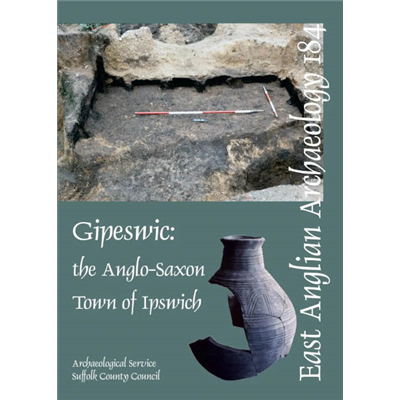 |
This volume describes how Ipswich (Gipeswic) was operating as a landing place for continental visitors by sea in the 7th century and as a permanent town from the early 8th century. Throughout the Anglo-Saxon period its primary function was as a port, importing wine and mill stones from northern France, Belgium and the Rhineland, but it was also a major craft production centre, dominated by pottery production. It was also important during the Viking settlement of eastern England in the late 9th century. The Danish occupation was associated with an economic boom and the town was first surrounded with a bank and ditch. Soon after the Norman Conquest, in 1066, the town was ravaged by the Conqueror, and many burnt-down houses have been excavated of late 11th century date. In some, the charred remains of their contents survived, including some bread rolls. However, the town soon recovered and a castle was built in the 12th century, which was demolished decades later. The account covers the excavations, directed by Keith Wade, from 1974 onwards. It provides information about the individual sites and includes specialist reports on the non-ferrous metal objects, glass and Anglo-Saxon coins - the bone and antler has already been published in 2024. More information and pictures can be found on the Suffolk Heritage Explorer The monograph is volume 184 in the journal East Anglian Archaeology Series. It is priced at £35 and is available from Script Books . It will also be available through Suffolk Community Libraries. |
|
| Friday, 25 April 2025 |
| An Historical Map of Ipswich published by the Historic Towns Trust |
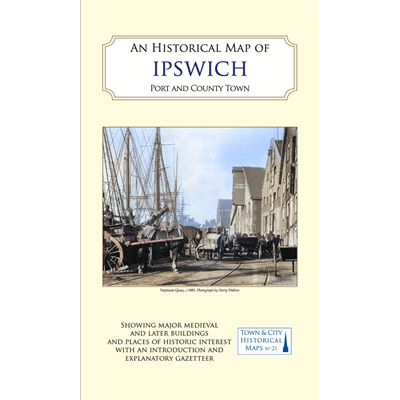 |
Taking as its base a 1901 Ordnance Survey map of the town, the Historical Map of Ipswich shows on a multi-period map how Ipswich developed, and includes lost medieval buildings, cemeteries, earthworks and sites of interest as well as those that remain. A comprehensive gazetteer on the map's reverse, complete with many illustrations, explains how Ipswich grew from a trading settlement on the River Gipping into the modern county town, and introduces its historic buildings and places of interest. The map was edited by Keith Wade and published in association with the Suffolk Institute of Archaeology and History, with a grant contribution from Ipswich Archaeological Trust. The ISBN is 978-1-0687091-0-4 and RRP of £11.99 Further information can be found on the Historic Towns Trust website, https://www.historictownstrust.uk/post/ipswich-a-new-map-of-england-s-earliest-town |
|
| Monday, 01 April 2024 |
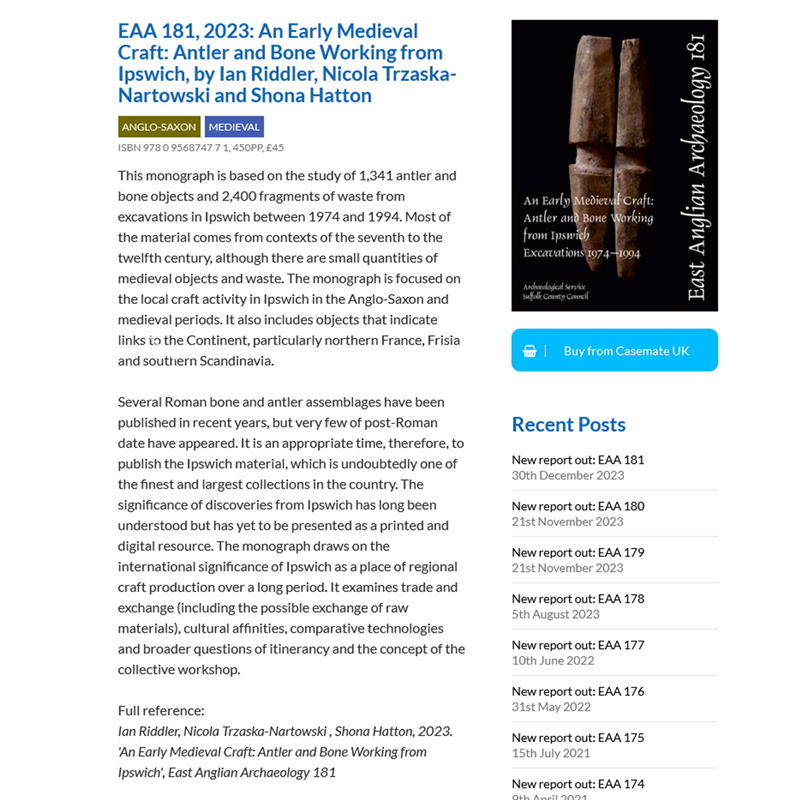
| Ipswich Bone and Antler working monograph published. |
 |
|
|
| Wednesday, 13 January 2021 |
| Death of Tony Hill |
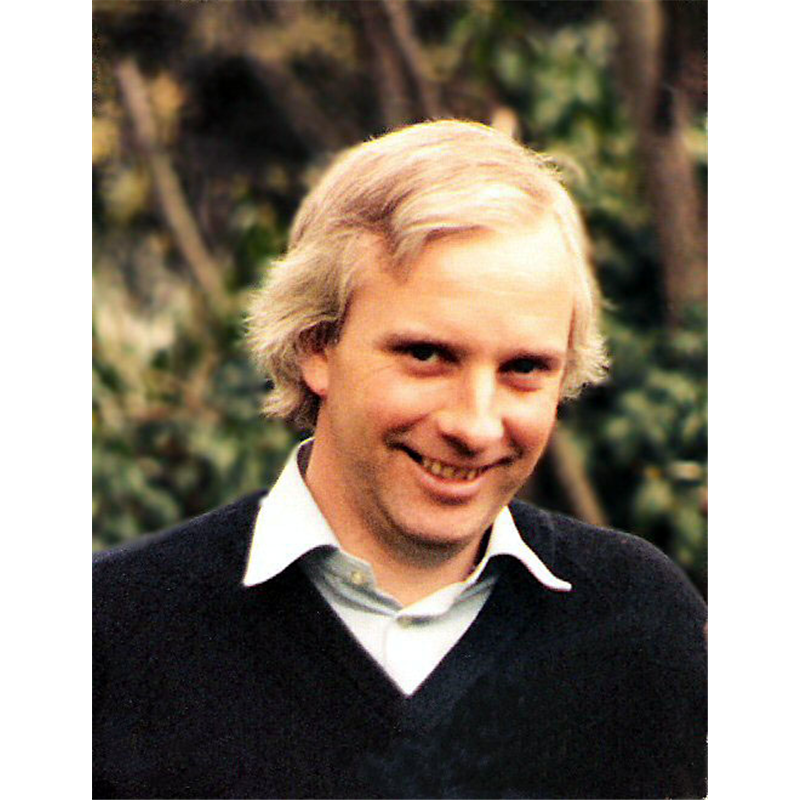 |
It is with the deepest regret that we record the death of another of our founding Trustees. Tony Hill was involved in the setting up of the Trust in 1982 and continued as a member of the committee until the past few years. His organisational abilities were important to the setting up of the Trust. He will be greatly missed.
|
|
| Tuesday, 03 November 2020 |
| Illustrating Ancient History
The Museum of Classical Archaeology |
 |
Illustrating Ancient history The Museum of Classical Archaeology Cambridge University On line until 30 Jan 2021 https://www.museums.cam.ac.uk/story/illustrating-ancient-history |
|
| Thursday, 15 October 2020 |
| Stoke Quay Excavation. Publication and the Bone Detectives |
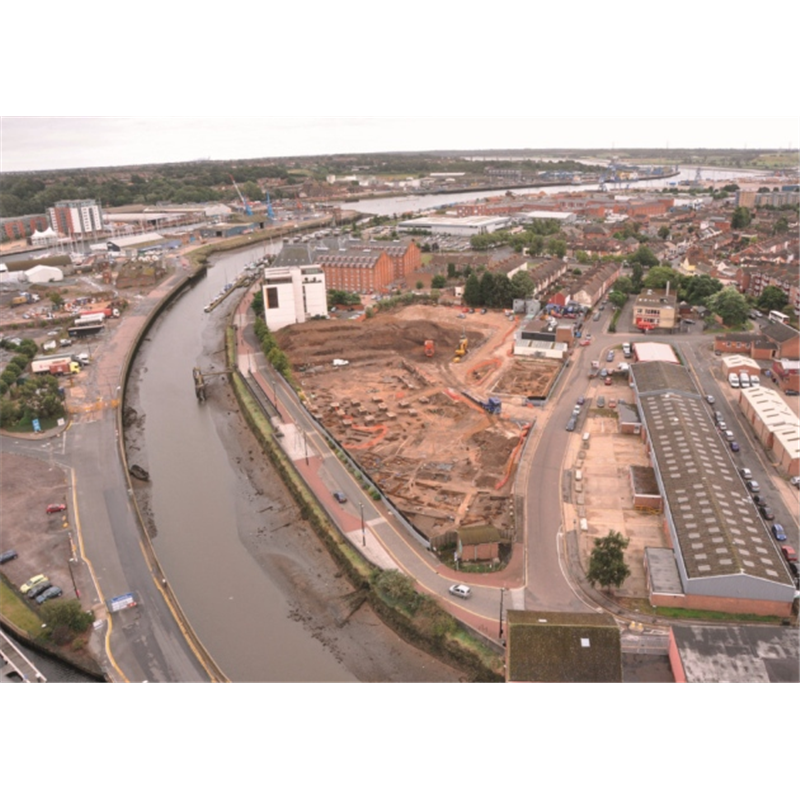 |
https://www.ipswichstar.co.uk/news/ipswich-on-channel-4-bone-detectives-1-6861173 For those who missed it here is a link to the Ipswich Star article on the episode of the "Bone Detectives" that described some of the interesting finds from The Stoke Quay site excavated in 2012. In addition here is a link to the imminent publication of the Stoke Quay Dig. https://www.oxbowbooks.com/oxbow/eaa-172-excavations-at-stoke-quay-ipswich.html |
|
| Thursday, 15 October 2020 |
| Ipswich Archaeological Trust in times of Covid. The Future of the Trust |
 |
It hardly needs a comment as there can be few if any who have not been affected by the ongoing Covid pandemic. However the Trust committee has met via Zoom to discuss the situation and we offer some clarification of our position. Regarding the AGM we have decided not to attempt a virtual meeting for members. We suspect the logistics would be to difficult for a substantial proportion of the membership. The Charity Commission is being pragmatic about proceedural matters. As long as we act in accordance with our terms agreed with the Commission we will not be held in breach. The matter will be revisited reviewed with the changing state of the epidemic. We append a "questionaire" to help us understand the feelings of our membership and other interested parties. This has been sent via email to those who have informed us of their email address. We urge you to respond. The Future of Ipswich Archaeological Trust At the 2019 AGM Chris Wiltshire raised the issue of the Trust’s future for discussion. Membership has fallen steadily from 119 in 2014 to 69 in 2019 and down to 46 at the present time with many members not renewing their subscriptions. The recession in development over the last ten years had meant that there have been few opportunities to visit excavations, with the exception of Stoke Quay in 2012. Communication with members by mail is now expensive with both printing and postage costs. This raised the question of whether the Trust should continue in its present form or pursue options for change making it easier and cheaper to run. Options being considered are: 1. Closing down the Trust. This isn’t recommended as the Trust performs an important role in advocacy and scrutiny of heritage provision in the town. 2. Cease having a membership. This would reduce our charitable remit and ability to inform people about the archaeology of the town. 3. Continue membership but stop paper communication relying solely on email to distribute newsletters and AGM notifications. The secretary currently has email addresses for 46 of the members and it was possible that other members also have email but haven’t disclosed them. 4. Abolish subscriptions but maintain a mailing list for those interested and rely on donations. At the AGM discussion there was support for the Trust to continue but with digital only communication. As those attending the AGM might not be representative of the membership as a whole, the Chairman agreed to send out a questionnaire to all members after which the Committee would consider the feedback. Please let the Secretary, Keith Wade, know which option you favour by email to keithwade999@btinternet.com or, post to Keith Wade, IAT, 1-2 Bourne Cottages, Bourne Hill, Wherstead, Ipswich, IP2 8NH, including your name, postal address, and email address NOTE This communication is being sent to the 46 members who have given the Secretary an email address in the past. This includes 21 of you who have not paid your subscription this year. Others have paid an outdated subscription by Standing Order. Subscriptions are now £8 per annum (£5.00 for retired). |
|
| Thursday, 24 September 2020 |
| The Bone Detectives visit Stoke Quay. Remarkable finds! |
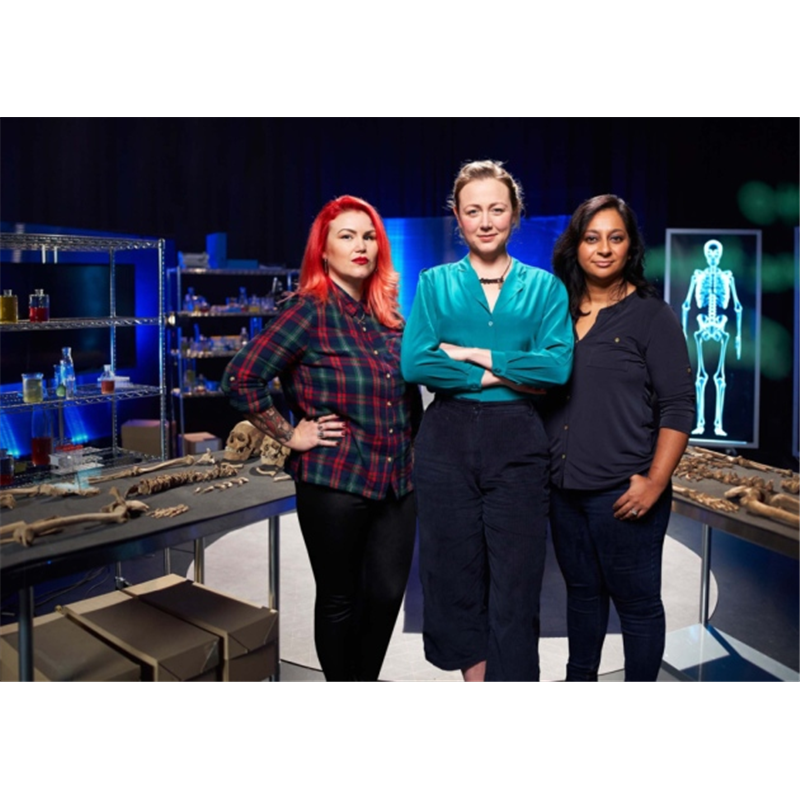 |
Recognition at Last!! On Channel 4 the series "The Bone Detectives" rather confusingly placed the episode based on the Stoke Quay dig, first. Therefore some missed it or were unaware of the existence of the programme. The film makers had been in touch with the Trust and other local heritage groups over a year ago in their research for the series. It is still possible to view the episode On Demand until Late October 2020. Copy and paste this link https://www.channel4.com/programmes/bone-detectives-britains-buried-secrets/on-demand/69663-002?intcmp=video_link:bip_ondemand:episodes |
|
| Wednesday, 11 April 2018 |
| Death of John Fairclough, Founder Trustee |
 |
John Fairclough who was a founder Trustee and long time Vice Chairman of the Trust died in March 2018 aged 75. John had a long and distinguished career in history and archaeology. He made a great contribution to schools involvement during his time at Ipswich Museum. On leaving Ipswich he immersed himself in historical projects in Yorkshire and latterly Scotland. He died soon after his move back to Suffolk. |
|
| Saturday, 18 November 2017 |
| Ipswich Heritage Network Symposium 18 November 2017 THIS HAS BEEN CANCELLED. |
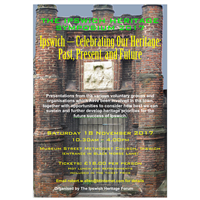 |
Ipswich Heritage Network Symposium 18 November 2017 IAT will be participating in the above important event. Please see the EVENTS PAGE for details. PLEASE NOTE THAT THIS EVENT HAS BEEN CANCELLED DUE TO POOR TICKET SALES. |
|
| Tuesday, 29 August 2017 |
| CBA Local Heritage Network Bulletin Aug 2017 |
 |
http://dmtrk.net/10MV-54CWH-82KFE5QA62/cr.aspx Copy & Paste the above link into your browser to see latest news from CBA network advocacy etc |
|
| Monday, 28 August 2017 |
| CBA Archaeology for All projects etc |
 |
http://dmtrk.net/10MV-52MT2-82KFE5QA62/cr.aspx The above link will take you to CBA website showing latest news events etc |
|
| Wednesday, 12 July 2017 |
| CBA Bulletin and news June July 2017 |
 |
http://dmtrk.net/10MV-4Z7LL-82KFE5QA62/cr.aspx http://dmtrk.net/10MV-4XVNL-82KFE5QA62/cr.aspx Copy and paste these links into your browser to view latest news from CBA advocacy network |
|
| Saturday, 13 May 2017 |
| Archaeology Today, A conference on the latest heritage projects around Suffolk 13 May 2017 |
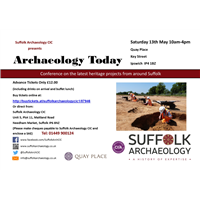 |
Suffolk County Council CIC present; ARCHAEOLOGY TODAY: A conference on the latest heritage projects from around Suffolk. Full details and downloadable fliers are found on Suffolk Archaeology website, See "Useful Links" on this website. |
|
| Tuesday, 09 May 2017 |
| Local Heritage Network Bulletin May 2017 |
 |
http://dmtrk.net/10MV-4UPSB-82KFE5QA62/cr.aspx Please copy and paste into your browser to view Local Heritage Network Bulletin May 2017 |
|
| Wednesday, 05 April 2017 |
| Local Heritage Network Bulletin April 2017 |
 |
http://dmtrk.net/10MV-4UFKG-82KFE5QA62/cr.aspx Local Heritage Network Bulletin April 2017 Please copy the above link to your browser to view |
|
| Friday, 03 March 2017 |
| Local Heritage Network Bulletin March 2017
http://dmtrk.net/10MV-4SSE9-82KFE5QA62-1/fw.aspx |
 |
Please copy and paste this link to read the march CBA Local Heritage network Bulletin. |
|
|
|
|
| Thursday, 14 April 2016 |
| Local Heritage Network Bulletin April 2016 |
 |
| http://dmtrk.net/10MV-44L9E-82KFE5QA62/cr.aspx
To view this item please copy and paste the link into your browser. |
|
| Monday, 22 February 2016 |
| LOCAL HERITAGE NETWORK BULLETIN No 6 |
 |
| http://dmtrk.net/10MV-4193I-82KFE5QA62/cr.aspx
Please copy and paste this link into your internet browser to view the latest BCA heritage Network bulletin. |
|
| Wednesday, 13 January 2016 |
| Local Heritage Network E Bulletin Cuts in 2016 |
 |
| Preparing for Cuts in 2016
http://dmtrk.net/10MV-3YJBF-82KFE5QA62/cr.aspx
Please copy and paste this link into your internet browser to view the latest BCA heritage Network bulletin. |
|
| Saturday, 10 October 2015 |
| Ipswich Archaeological Archive goes live |
 |
| Press release by Faye Minter, Senior Finds Recording Officer SCC Arcaelogical Service
Internationally important Ipswich excavation archive is made publicly accessible
Between 1974 and 1990 there were 36 excavations within the historic core of Ipswich. The results of these excavations are of international importance due to the early origins of the town. Middle Saxon Ipswich was one of only a handful of English trading settlements displaying urban characteristics in the 700’s, alongside London, Southampton and York.
The excavations were archived and carried out by the Suffolk Archaeological Unit (subsequently Suffolk County Council Archaeological Service) under the direction of Keith Wade but never fully published. The results have now for the first time been made publicly accessible as a web-based resource on the Archaeology Data Service; http://archaeologydataservice.ac.uk/archives/view/ipswich_parent_2015/
The distribution of excavated sites is shown in an 'Interactive Map' and there are also summary narrative reports describing the chronological sequence and the range of features and activities identified for each site. It is hoped that the data will be the basis of new research into the development of Ipswich.
The consolidation of the 1974-90 archive and the preparation of the digital archive by Suffolk County Council Archaeological Service has been funded by English Heritage (now Historic England) between 2009 and 2015
|
|
| Tuesday, 08 September 2015 |
| Death of our President |
 |
It is with great sadness that we announce the death of John Blatchly our founding president. He died on 3 September 2015 after a short illness. John was an internationally renowned figure in East Anglian history and we were pround to have him as our president. He was a continual source of wisdom, knowledge and inspiration. John was present at most of our committee meetings and AGMs and contributed massively to the successful continuation of the Trust. We and all those involved in local heritage matters will miss him. Truely irreplaceable! A more detailed obituary can be found in our Sept 2015 newsletter on this site. |
|
| Thursday, 27 August 2015 |
| Local Heritage Network Bulletin No 4 |
 |
| Latest Local Hertage Network Bulletin
http://dmtrk.com/10MV-3LW1A-82KFE5QA62/cr.aspx
Please copy and paste this link into your internet browser to view the latest BCA heritage Network bulletin. |
|
| Monday, 20 July 2015 |
| Museums visit by Chairman and Hon Secretary |
 |
| On 20 July 2015 Chris Wiltshire and Keith Wade were invited to inspect the Colchester and Ipswich Museums Service Storage facilities. We had voiced concerns regarding the curation and future of finds originating from Ipswich digs. It was good to see serried ranks of boxes with familiar labels such as "Buttermarket" and "School Street".
Reasonable assurances were made and our concerns listened to Jayne Austen and Philip Wise, Museum and Heritage Managers from the service.
The IAT looks forward to working with them on the Ipswich Museums forthcoming reconstruction |
|
| Saturday, 27 June 2015 |
| Local Heritage Network Bulletin No 3 |
 |
| Please copy and paste this link into your internet browser to view the latest BCA heritage Network bulletin. It makes for salutory reading
http://dmtrk.com/10MV-3HFAD-82KFE5QA62/cr.aspx |
|
| Friday, 26 June 2015 |
| A PERFECT STORM FOR ARCHAEOLOGY |
 |
| This bulletin came from the British Association for Archaeology
Never have Advocacy organisations been so important!!
A Perfect Storm for Archaeology?
George Osbourne has recently announced that government departments have to find £3 billion in savings over the next year. The Department of Communities and Local Government will have a reduction of £230 million from its £8 billion budget this year alone. Promises have been made that local authority budgets will not be affected, but I doubt many are convinced that these will be upheld. The system of archaeological protection, introduced during the last majority Conservative government of the early 1990s, has begun to creak under the strain. Pressure on public services has hit local authority provision for archaeology, and seriously impacts how its is protected.
Only 5% of England’s heritage is designated and protected by law. The rest depends on protection through local authority archaeology and conservation advisers, who ensure the planning process for building work takes into account any impacts on the historic environment.
On May 21 2015, Brandon Lewis, the housing minister, announced that the construction of housing was at its highest levels for six years. Despite this recovery from recession, the Home Builders Federation continue to argue for deregulation and streamlining in the planning system – an agenda which often views historic environment protections as a pesky barrier to development.
But at the same time resources to local planning authorities are being squeezed and staff are struggling to uphold protections under the National Planning Policy Framework (NPPF). The NPPF sets out the government’s requirements for what is “relevant, proportionate and necessary” to the planning system and cuts through what the government consider to be red tape. This is forcing authorities to accept development that is unsustainable.
The impact of development on “heritage assets” – that is, archaeological sites, monuments or historic buildings – are material considerations during the planning process. Archaeological work in advance of construction is normally recommended and overseen by specialist archaeological officers from the relevant local government authority. The data gathered after this advice and recommendation is recorded in the associated Historic Environment Records. This data is held for future reference during the planning process, and used as a resource for research and public engagement.
Historic Environment Records and archaeological planning advice are public services. They provide support and advice for business, opportunities for education, social and cultural activities, and add a sense of time depth to landscape and townscape, enhancing local environments. These factors, drawn from the important but barely recognised work of archaeological protection in the UK planning system, support the creation of better places to live, work and stay.
But these public services are not protected. Many specialist posts are being reduced or made redundant, at a time when there is a record push for development of housing and business premises, especially on brownfield and green belt land. There has been a 32% reduction in specialist historic environment advice in local authorities since 2006, and the equivalent of 45 full time jobs have been lost (11%) between 2013 and 2014 alone. As planning applications have risen during this time, this continuing decline in local authority capacity puts archaeology at serious risk.
The benefits of this archaeological work eventually make their way to the nation’s museums and archives. And even this storage, and the important dissemination of these discoveries to both the public and researchers, is at risk in a climate of financial austerity.
Research by the Society of Museum Archaeologists has discovered that museums in 47 local authorities were unable to accept archives due to storage issues and budget cuts. In 2012, there were 9,000 undepositable archaeological archives in England. That’s 9,000 (and no doubt more since) archives with data and objects that cannot be seen or accessed by the public. This means researchers may not be aware of their existence, or be able to synthesise this new knowledge into our archaeological understanding.
There is a tendency to think that archaeology, museums and heritage sites are a luxury when allocating ever-diminishing funds at local authority level. But there is plenty of data demonstrating the economic benefits of heritage and archaeology; recent research suggests the heritage-based tourism economy alone directly accounts for at least £5 billion in GDP and 134,000 jobs.
Despite the huge importance of heritage to tourism, the construction process, businesses, local communities, and the education, well-being and enjoyment of the population, the impacts of these budget cuts on archaeological protection, archiving and public enjoyment of their own local heritage are all too frequently overlooked.
Our ability to protect our collective past is at risk. When will these issues finally gain the political attention they deserve?
|
|
| Friday, 05 June 2015 |
| Ipswich Museum redevelopment. IAT involvement!! |
 |
| Looks like we may be getting somewhere?!
Email received:
Subject: Jayne Austin, Ipswich Museums Manager
Message: I would like to invite a representative, or representatives of the Trust to visit us at Ipswich Museum to discuss our plans for the archaeological collections and explore the possibility of working together. I would be grateful if you could put me in touch with the relevant person to discuss and arrange this.
With thanks and best wishes
Jayne
We are of course delighted to be involved
|
|
| Thursday, 26 March 2015 |
| Chairman and Hon Secretary meet Ipswich Borough Council officials |
 |
| We are pleased that Ipswich Borough Council have now responded positively to our concerns regarding the future of the massive finds collection from Ipswich.
Cllr Bryony Rudkin and IBC Chief Operating Officer Helen Pluck met Chris Wiltshire and Keith Wade for cordial talks at IBC on 26 March 2015.
A good deal of thought and consideration has already gone into the major project to redevelop Ipswich Museums. Many of our concerns have been addressed in these plans.
It would appear that we are very much in accord that appropriate measures be taken to safeguard and make available the internationally important material from over 30 years of Ipswich Archaeology.
Most of it was undertaken under the direction of Keith Wade and his colleagues at Suffolk County Council., It is therefore fitting that the IAT has been invited to participate in future decision making. We are therefore optomistic that IBC is committed to continuing an appropriately active interest from now on.
We believe that Ipswich and the wider community will benefit from promotion of the town as having international significance |
|
| Tuesday, 06 January 2015 |
| Heritage centre Latest |
 |
| At a meeting of "Stakeholders" tonight, held at UCS we were appraised of the latest proposal that the three Suffolk record offices would remain. The Ipswich Branch is to undergo a major revamp, being relocated to the waterfront adjacent to UCS and be jointly operated by the University and SCC.
The proposed centre will house state of the art storage, display and conservation facilities as well as a good auditorium and seminar rooms. There will also be much better research areas and a restaurant with display facilities.
This would appear to be a very exciting venture with a proposed start date in 2017 to open in 2019.
All that is now needed is about £16m and all the usual planning consents etc....watch this space! |
|
| Friday, 19 December 2014 |
| A Plea to Ipswich Borough Council |
 |
| We have written to the Head of Heritage and Cultural Services at Ipswich Borough Council expressing our concerns for the future of finds presently held in County Council facilities.
Below is a copy of that letter. It has not been replied to or its receipt acknowledged! Perhaps it was lost in the post. We will resend it after the festive season.
"Head of Community and Cultural Services
Ipswich Borough Council
Grafton House
15-17 Russell Road
Ipswich, IP1 2DE
29 October, 2014
Dear Mr Mole
Ipswich High Street Campus Project: The future curation of Archaeological Excavation finds and records from Ipswich
Ipswich Archaeological Trust has been following the evolving proposals for the future of the various heritage services relevant to Ipswich for many years and has lobbied both Ipswich Borough Council and Suffolk County Council on numerous occasions.
The substantial body of archaeological evidence from Ipswich, accumulated since 1974, is undeniably of international importance and its future curation is of paramount interest to Ipswich Archaeological Trust and the wider community.
It is the responsibility of Ipswich Borough Council, as museum authority, to ensure that this large collection of archaeological finds and the associated excavation records are curated for posterity. Ideally, this requires that:
• All finds and records are stored in environmental conditions which conform to national standards;
• All finds are monitored for condition and conservation carried out as appropriate;
• All finds and records are accessible for those who wish to study them;
• All finds are stored in one store (or adjacent stores) in Ipswich;
• A selection of the finds should be on display to the public in Ipswich preferably as part of exhibitions explaining the origin and development of the town.
Currently, this body of evidence is scattered in four locations:
• Suffolk County Council Archaeological Service stores in Ipswich and Bury St Edmunds
• Ipswich (High Street) Museum and Colchester Museum’s store on the outskirts of Colchester.
Currently, both councils are preparing proposals for new buildings to house their heritage collections but it is far from clear to this Trust what provision is being made to house the archaeological finds and records from Ipswich.
The only information available to us about the £20million Ipswich High Street Campus Project is the brochure on the IBC website. While we clearly welcome any improvement in museum provision, the brochure appears to show only a limited open access storage facility and there is no mention of any other provision.
Suffolk County Council has watered down its proposals for a new heritage centre. The plan now appears to consist of an additional store for the Record Office on the UCS Campus, which could be later expanded with HLF support.
In spite of previous assurances, we have seen no evidence of co-operation between the two authorities to deliver a common sense solution which would ensure that the major archaeological assemblage from Ipswich is housed in appropriate premises commensurate with its national and international importance.
The current financial situation of local authorities should not be a significant problem with the continuing availability of HLF funds. However, the lack of a comprehensive vision for Ipswich heritage collections could well compromise any bid to them, especially if lacking the support of local organisations such as IAT.
Hopefully, our fears are unfounded but we would like assurances that a comprehensive, long term solution for the curation of current and future archaeological collections will be included in the development plans for Ipswich Museum. We would regard the spending of £20million without such provision being included as an abdication of responsibility.
I look forward to your assurances and do not hesitate to contact me if Ipswich Archaeological Trust can assist in any way.
Yours sincerely,
Dr Christopher Wiltshire,
Chairman.
|
|
| Saturday, 01 February 2014 |
| Dig at St Mary Quay |
 |
| NPS Archaeology are currently excavating at St Mary Quay prior to the conversion and extension of the church for Suffolk MIND.
The whole footprint of the proposed extension across the churchyard is being excavated to remove the burials and examine the pre church archaeological levels below.
The conversion of the medieval church also involves ground works which are being monitored.
Although an earlier building is known to have existed, the present church was constructed c.1443-1543. The foundation date for the church is not known. It may be one of the St Mary’s listed in Domesday Book and is certainly in existence by 1254 (Taxation of Norwich). The graveyard is the smallest of the Ipswich medieval churches but originally extended further south. It was reduced in size when Key Street was widened northwards and human remains have been found under the pavement on numerous occasions.
A trench, 3m by 2m, was excavated early in 2012 to evaluate the archaeological remains and density of burials present at the site. A total of eleven articulated burials were located within the trench which ranged in date from Middle Saxon to late Post Medieval. |
|